
Plumbing Repairs Before Selling: What Wisconsin and Illinois Homeowners Actually Need to Know
Plumbing is one of those things that stays invisible until it isn’t. When it works, nobody thinks about it. When it doesn’t, it becomes the centerpiece of every inspection report, every buyer negotiation, and every deal that falls apart at the worst possible moment. If you’re getting ready to sell a home in Wisconsin or Illinois and you’re not sure what shape your plumbing is in, this post is worth reading before you list.
Why Plumbing Gets Scrutinized So Hard During a Sale
Buyers and their inspectors know that plumbing problems are expensive, disruptive, and easy to miss until the home is under contract. That combination makes plumbing one of the most common sources of post-inspection renegotiations. A buyer who was happy with your price on day one can come back with a $12,000 repair estimate and a request for a concession after the inspection, and at that point you’re negotiating from a weak position.
Lenders add another layer. Homes purchased with FHA, VA, or USDA loans have to meet minimum property standards. Active leaks, failing water heaters, and certain types of older pipe materials can cause a home to fail appraisal under those programs, which eliminates a significant portion of the buyer pool before anyone makes an offer.
Getting ahead of the obvious problems before you list puts you in a much stronger position: fewer surprises at inspection, fewer concessions at closing, and a smoother path to actually getting the deal done.
The Plumbing Issues That Come Up Most Often in Wisconsin and Illinois Homes
Older housing stock is common throughout southeastern Wisconsin and northeastern Illinois. Kenosha, Racine, Milwaukee, and the communities across Lake County and McHenry County have a lot of homes built before 1980, which means they may be carrying plumbing materials and configurations that buyers and lenders will flag.
Here are the issues that surface most frequently:
Galvanized Steel Pipes
Galvanized pipes were standard in homes built before the 1960s. Over time, the zinc coating on the inside corrodes and the pipe walls close in, reducing water pressure and eventually failing. If your home still has galvanized supply lines, buyers will notice, inspectors will flag it, and lenders may require replacement before approving a loan. Replacing galvanized with copper or PEX is a common pre-sale upgrade on older Wisconsin and Illinois homes.
Polybutylene Pipes
Polybutylene, often called poly-B, was used in homes built between roughly 1978 and 1995. It was cheap and fast to install, which made it popular during that period. It was also prone to failure, particularly where it connects to fittings, and has been the subject of class action litigation. Many insurance companies won’t cover homes that still have poly-B, which creates a real obstacle for buyers trying to obtain homeowners insurance. If your home was built or significantly renovated in that window, it’s worth checking whether poly-B is present.
Lead Pipes or Lead Solder
Lead service lines and lead solder were banned from new construction in 1986, but homes built before that date may still have them. This is a health and safety issue, not just a cosmetic one, and buyers and their inspectors take it seriously. Disclosure is required in Wisconsin and Illinois when lead is known to be present. Replacement is often expected before a sale can close, particularly when buyers have children or when lender requirements apply.
Active Leaks and Water Damage
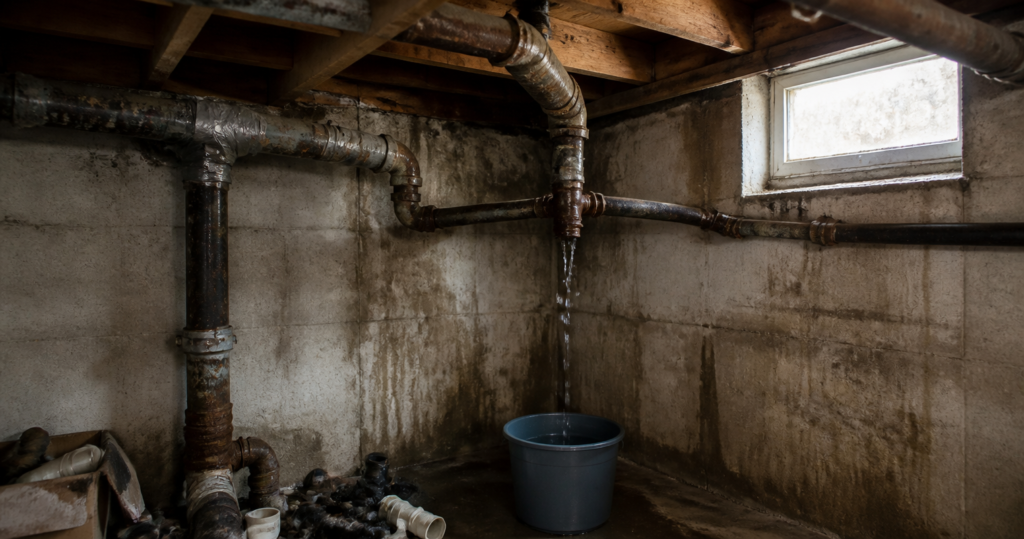
Any visible leak, whether under a sink, around a toilet base, in a crawl space, or along supply lines in the basement, will be noted in an inspection report. Water staining on ceilings or walls signals past or current leaks even when the source has been fixed. Buyers treat water intrusion as a red flag that points to mold, structural damage, or ongoing problems the seller hasn’t disclosed. Fix active leaks before the first showing. Address water staining by identifying and resolving the source, not by painting over the evidence.
Aging Water Heaters
A water heater older than 10 to 12 years is near or past the end of its typical service life. Inspectors note the age and condition in their reports, and buyers often request replacement or a price concession when the water heater is clearly at end of life. Replacing a standard tank water heater before listing is a relatively modest investment that removes a predictable negotiating point.
Slow Drains and Sewer Line Concerns
Slow drains throughout the house, not just in one fixture, can indicate a main line blockage or a failing sewer lateral. Tree root intrusion is common in older neighborhoods across southeastern Wisconsin and northeastern Illinois, where mature trees are widespread and sewer laterals run beneath landscaped yards. A sewer scope inspection before listing can tell you what you’re dealing with. If there’s a blockage, clearing it is straightforward. If the lateral is cracked or collapsed, that’s a bigger conversation, but it’s better to know before a buyer’s inspector finds it.
What a Pre-Listing Plumbing Inspection Actually Involves
A licensed plumber doing a pre-sale inspection will typically walk through the home checking water pressure, testing all fixtures, inspecting visible pipe runs, examining the water heater, and looking for signs of leaks or past water damage. If you’re in an older home and haven’t had a sewer scope done recently, adding that to the inspection is a smart move for the modest additional cost.
The goal isn’t to find every possible thing that could be improved. It’s to identify the issues a buyer’s inspector will flag, so you can decide in advance how you want to handle them, on your terms and your timeline, rather than under contract pressure with a buyer waiting.
How to Decide What’s Worth Fixing Before You List
Not every plumbing issue needs to be addressed before a sale. The decision depends on cost, what buyers in your market actually care about, and what your net proceeds look like across different scenarios.
A useful framework:
- Fix it if it will kill financing. If an issue is likely to cause a home to fail appraisal under FHA, VA, or USDA standards, and your likely buyers will be using those loan programs, the repair is usually the right call. Losing a buyer over a lender-required repair and starting over costs more than the fix.
- Fix it if the concession will be larger than the repair cost. Buyers almost always overestimate repair costs when negotiating post-inspection. If a plumber will clear a sewer blockage for $400, doing it before listing beats handing a buyer a $2,000 concession for the same issue.
- Price it in and disclose if the repair is large and the math doesn’t support it. Full pipe replacement is a major project. If your home needs a complete repipe and you don’t have the capital or timeline to do it, pricing the home to reflect that and disclosing the condition clearly is a legitimate approach. Some buyers, particularly investors and cash buyers, are comfortable taking on that kind of work.
- Don’t fix cosmetic issues if structural ones remain. Replacing a faucet when the pipes behind the wall are failing is a misallocation of money and attention. Address the substantive issues first.
Wisconsin and Illinois Disclosure Requirements
Both Wisconsin and Illinois require sellers to disclose known material defects, and plumbing problems fall squarely within that category. In Wisconsin, the real estate condition report requires disclosure of known issues with plumbing, water supply, and sewage systems. Illinois has similar requirements under the Residential Real Property Disclosure Act.
Disclosing a known problem doesn’t mean you’re obligated to fix it. It means the buyer has the information they need to make a decision. What you cannot do is conceal a known defect, paint over water damage without disclosing its source, or represent the plumbing as functional when you know it isn’t. Beyond the ethical problem, the legal exposure after closing is real.
If You’d Rather Not Deal With It
Some sellers read a list like this and feel the weight of it immediately. The repairs are real, the costs are significant, the timeline is longer than what works for their situation, and the idea of managing contractors while also managing a sale is more than they want to take on. That’s a completely reasonable place to land.
Selling as-is to a cash buyer removes the repair question from the equation. No contractor scheduling, no permit pulling, no inspection negotiations. The tradeoff is price. A cash buyer is pricing in the cost of the work they’ll need to do, along with carrying costs and their own margin. The offer will be below what the home would sell for fully repaired. That tradeoff is the right one for some sellers and the wrong one for others, and the only way to know is to run the actual numbers for your specific property.
Royal Real Estate Solutions works with homeowners across Kenosha, Milwaukee, Racine, and Waukesha counties in Wisconsin, and Lake County and McHenry County in Illinois. We buy homes as-is, which means plumbing issues, deferred maintenance, and repair backlogs are our problem to sort out, not yours. Our team also includes licensed agents who can list your home if that path puts more money in your pocket after the math is done.
If you’re trying to figure out which direction makes sense, give us a call. Tell us what’s going on with the property. We’ll help you think through the options and point you toward the right path, even if that path isn’t us.