
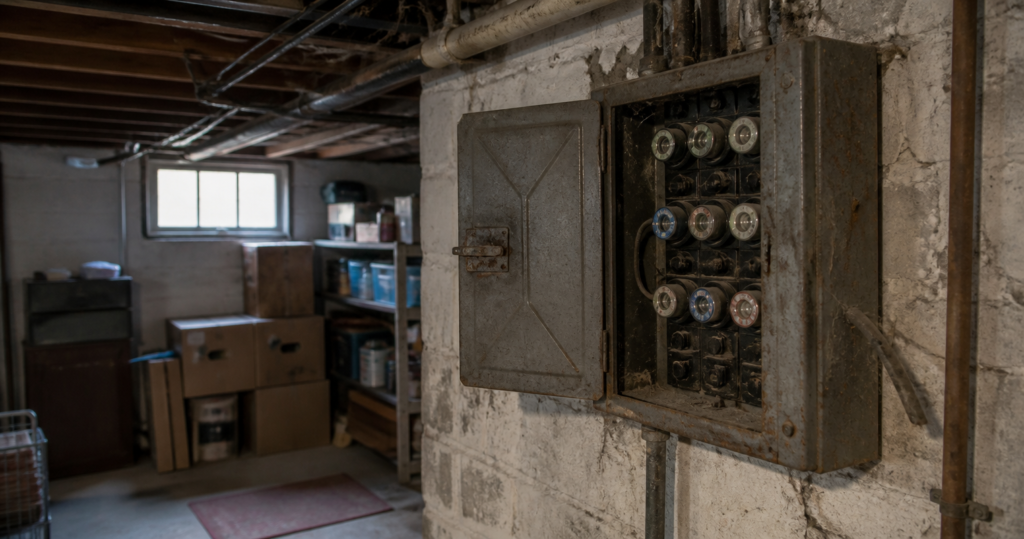
Why Electrical Issues Stop Home Sales Cold
Most sellers focus on curb appeal, fresh paint, and decluttered rooms when they prepare a home for sale. Electrical systems rarely make the list until something goes wrong. Then they become the reason a buyer walks, a lender refuses to fund, or a closing gets pushed back while everyone argues about who pays for the repairs.
Lenders require a home to meet basic safety standards before they’ll fund a mortgage. Buyers doing due diligence hire inspectors who know exactly what to look for. And in Wisconsin and Illinois, homes that were built or last updated decades ago are carrying electrical systems that often don’t meet current standards. That’s not a moral failing. It’s just age. But it becomes your problem the moment you put the house on the market.
Understanding what inspectors flag, what lenders require, and what updates actually matter can save you time, money, and a deal that falls apart at the worst possible moment.
The Most Common Electrical Problems in Older Wisconsin and Illinois Homes
Homes built before 1980 in the upper Midwest tend to share a short list of recurring electrical issues. If your home was built during this period, these are the areas worth examining before a buyer’s inspector does it for you.
Knob-and-Tube Wiring
Knob-and-tube wiring was standard in homes built before roughly 1950. It consists of ceramic knobs that anchor wires to framing and ceramic tubes that protect wires where they pass through wood. The system itself isn’t inherently dangerous when it’s original and unmodified, but most knob-and-tube wiring in active use today has been modified, extended, or covered with insulation over the decades, all of which create real fire risk.
Most insurers will not write a homeowner’s policy on a house with active knob-and-tube wiring. No insurance means no mortgage. No mortgage means no traditional sale. If your home still has active knob-and-tube, a full rewire is typically required to sell to a retail buyer using financing.
Aluminum Wiring
Aluminum wiring was used heavily in homes built between roughly 1965 and 1973, when copper prices spiked. Aluminum expands and contracts more than copper with temperature changes, which loosens connections over time. Loose connections generate heat. Heat at a connection point is how electrical fires start.
Aluminum wiring doesn’t automatically disqualify a home from sale, but it requires disclosure in both Wisconsin and Illinois, and buyers and their lenders will want documentation that the system has been evaluated and any connections addressed. A licensed electrician can install approved connectors (called AlumiConn or similar) at each outlet, switch, and fixture to make an aluminum-wired home safe and insurable.
Federal Pacific and Zinsco Panels
Federal Pacific Electric panels and Zinsco panels were installed in millions of American homes from the 1950s through the 1980s. Both have a documented history of breakers that fail to trip when they should, meaning the circuit protection that’s supposed to prevent overloads and fires doesn’t function reliably.
Home inspectors flag these panels consistently. Some insurers refuse to cover homes that still have them. Replacing the panel is the standard recommendation, and in most cases it’s the only way to satisfy a buyer’s lender or insurer.
Undersized Electrical Panels
A 60-amp panel might have been adequate for a home built in 1960. Today, with central air conditioning, modern appliances, electric vehicle chargers, and home offices drawing power, a 60-amp panel is almost always undersized for current demand. Buyers notice. Lenders sometimes require upgrades. And a panel that trips constantly or shows signs of overloading is a negotiating point for every buyer who sees it.
A 100-amp panel is generally sufficient for most of the homes we work with. If you’re still running on 60 amps, upgrading to 100 or 200 amps is the standard fix and runs roughly $1,500 to $3,000 depending on the complexity of the job and local permit requirements.
Ungrounded Outlets
Two-prong outlets indicate an ungrounded electrical system. Grounding provides a safe path for fault current and is required by current electrical codes. Ungrounded systems aren’t necessarily dangerous in normal use, but they can’t support modern electronics safely and are a consistent inspection flag.
The fix ranges from replacing two-prong outlets with GFCI outlets (a code-compliant workaround that adds protection without full rewiring) to full rewiring of the affected circuits, depending on what the rest of the system looks like.
Missing GFCI and AFCI Protection
Ground fault circuit interrupters (GFCI) are required by current code in bathrooms, kitchens, garages, basements, and anywhere near water. Arc fault circuit interrupters (AFCI) are required in bedrooms and living areas in most current code versions. Older homes typically have neither.
These are relatively inexpensive fixes. A licensed electrician can add GFCI outlets or breakers and AFCI breakers in an afternoon. Buyers and inspectors notice when they’re missing, and lenders on FHA and VA loans specifically require GFCI protection in wet areas.
What Wisconsin and Illinois Require at the Point of Sale
Neither Wisconsin nor Illinois requires a seller to bring a home’s electrical system fully up to current code before selling. What both states do require is disclosure.
In Wisconsin, sellers must complete a Real Estate Condition Report disclosing known defects, including electrical problems. Concealing a known issue creates legal exposure. If you know the panel is a Federal Pacific, you disclose it. If you know the basement has ungrounded outlets and a history of tripping breakers, that goes on the report.
In Illinois, the Residential Real Property Disclosure Act requires similar disclosure of known material defects. Illinois sellers must disclose electrical problems they’re aware of, and failure to do so can result in legal action after closing.
Disclosure doesn’t mean you’re required to fix everything. It means buyers know what they’re buying. The practical reality is that disclosed issues become negotiating points. A buyer may ask for a price reduction, a repair credit, or the work to be completed before closing. Your leverage depends on market conditions, how many other buyers are interested, and how significant the issue is.
What you cannot do in either state is conceal a known electrical problem and hope no one finds it. Inspectors are thorough, and the legal risk of non-disclosure outlasts the closing date.
How to Assess Your Home’s Electrical Before Listing
If you suspect something might be wrong with your electrical, it’s worth spending a few hundred dollars on a licensed electrician’s assessment before you list. This is different from a home inspection. A licensed electrician can open the panel, evaluate the wiring, identify code issues, and give you a clear picture of what needs attention and what it will cost. If your home is newer, the electrical has been updated recently, or nothing has given you reason for concern, you may not need this step at all. Save it for situations where something already feels off: breakers tripping regularly, outlets that don’t work, a panel you’ve never had looked at in 30 years.
When you do get that assessment, the information does three things for you. First, it eliminates surprises during the buyer’s inspection. Second, it lets you make informed decisions about what to fix before listing versus what to disclose and price accordingly. Third, it gives you documentation you can share with buyers, which builds confidence and reduces the likelihood of a deal falling apart mid-transaction.
In Wisconsin, electrical work typically requires a permit pulled by a licensed electrician. In Illinois, permit requirements vary by municipality, but most jurisdictions require permits for panel replacements, new circuits, and rewiring work. Budget for permit costs when you’re estimating repair expenses.
What to Fix, What to Disclose, and What to Price Around
Not every electrical issue requires full remediation before listing. The decision depends on the severity of the problem, the cost of the fix, the current market, and what kind of buyer you’re targeting.
Issues that typically need to be resolved before a traditional sale can close:
- Active knob-and-tube wiring (insurer requirement blocks financing)
- Federal Pacific or Zinsco panels (insurer and lender resistance)
- Any condition that creates an immediate safety hazard
- GFCI protection in wet areas for FHA or VA financed buyers
Issues that can often be handled through disclosure and pricing:
- Aluminum wiring with properly installed connectors already in place
- Ungrounded outlets in a home that’s priced to reflect its condition
- Undersized panels in homes where buyers are aware and willing to upgrade themselves
- Missing AFCI protection where local enforcement doesn’t require it at point of sale
The market matters here. In a competitive market where buyers are waiving inspections and moving fast, a seller has more room to disclose and price accordingly. In a slower market where buyers have leverage, the same issues can become sticking points that kill deals. A licensed agent with current market knowledge can help you calibrate that decision.
What Repairs Actually Cost in the Current Market
Electrical repair costs vary by scope, contractor, and local permit fees, but rough benchmarks help with planning.
- Panel replacement (60-amp to 100-amp or 200-amp): $1,500 to $3,000
- Full home rewire (knob-and-tube replacement): $8,000 to $20,000 depending on home size and complexity
- Aluminum wiring remediation (AlumiConn connectors throughout): $1,500 to $4,000
- GFCI outlet installation (per outlet): $100 to $200 including labor
- AFCI breaker installation (per circuit): $50 to $150
- Electrician assessment (pre-listing): $200 to $500
These are starting-point estimates. Get at least two quotes from licensed electricians before committing to work. In Wisconsin, verify the contractor holds a valid state electrical contractor license. In Illinois, licensing requirements vary by county and municipality, so confirm the contractor is licensed for your specific jurisdiction before work begins.
If You’d Rather Not Deal With Any of It
Some sellers are in a position to manage repairs, coordinate contractors, pull permits, and wait for the work to be done before listing. Others aren’t. Maybe the timeline doesn’t allow it. Maybe the budget is already stretched. Maybe the idea of managing an electrical project on top of everything else that comes with selling a home is simply more than makes sense right now.
That’s a legitimate place to be. Selling as-is to a direct buyer is a real option. We buy homes in southeastern Wisconsin, including Kenosha, Milwaukee, Racine, and Waukesha counties, and in northeastern Illinois in Lake County and McHenry County, in their current condition. Electrical issues, deferred maintenance, outdated systems. None of that stops us from making an offer.
What you trade in price, you gain back in simplicity. No contractor coordination, no permits to track, no repair timelines to manage, no buyer asking for credits after the inspection. You know what you’re getting, and you close on a timeline that works for you.
If that sounds like it fits your situation, give us a call. We’ll walk through what you’ve got, tell you what we can offer, and if a traditional listing actually makes more sense for you, we’ll tell you that too.